
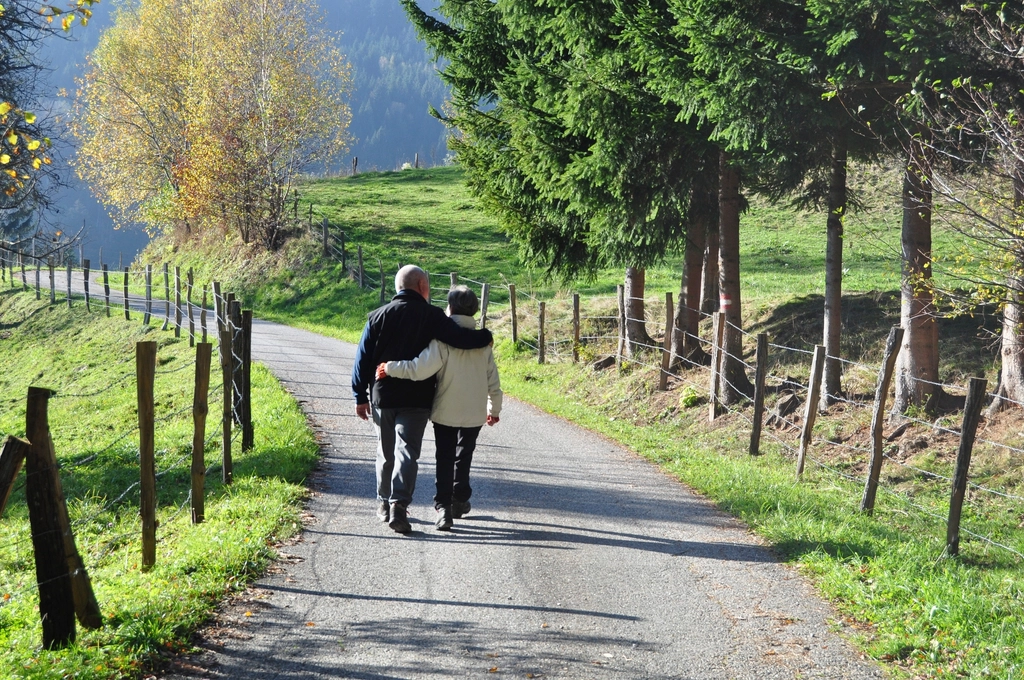

The Nine-Year-Old and the Seventy-Nine-Year-Old Want the Same Things
Organizers tend to assume that a mixed-age outing is a compromise: the children will be bored, the older adults will be exhausted, and everyone would have had a better time in their own group. That assumption is usually wrong, and it comes from designing the wrong kind of event. A nine-year-old and a seventy-nine-year-old actually want very similar things from an afternoon outdoors — somewhere interesting to stop, something to look at, a reason to be there, snacks, and permission to go at their own speed. It is the people in the middle, the ones with fitness and schedules and a target pace, who need talking down.
Design for the Two Ends, Not the Average
The single decision that determines whether a three-generation outing works is who the route was built for. If you plan for the average participant, both ends have a bad day: the child is dragged along a featureless stretch with nothing to do, and the oldest walker spends the entire time being politely waited for.
Plan instead for the shortest legs and the shortest attention span at once, then let the energetic people burn off their surplus within that structure. This is not lowering the bar. A route that is genuinely good for a seventy-nine-year-old — interesting, well-surfaced, with somewhere to sit and something happening — is a better route for everybody. The teenager who wanted more distance can run ahead to the next junction and back twice, and will enjoy that more than a long grind.
Pace, Distance and the Shape of the Route
Distance is not the useful number
Time on feet and distance from the car matter far more than total kilometers. Two hours out and two hours back is a hard day for a lot of people. Four separate half-hour segments with real stops between them is not, even if the total is the same. Think of the outing as a series of short hops with destinations rather than one long walk with a rest.
Loops beat out-and-back routes because nobody has to retrace ground they are tired of, and figure-eight loops are better still, since anyone who has had enough can peel off at the middle without ending the day for everyone else. A route with a bail-out point is a route people join.
Surfaces and seats
The thing that ends outings early is rarely distance. It is uneven ground, a lack of anywhere to sit, and no restroom. Firm, level surfaces let a walking frame, a stroller and a wobbly toddler all travel the same path. Benches every few hundred meters are the difference between an older participant walking two kilometers comfortably and refusing to come at all. Check these before publishing a route, and say plainly in the invitation what the surfaces and facilities are, so nobody has to phone and ask.
Give Everybody a Job
The fastest way to spoil a mixed-age outing is to make the youngest and the oldest into passengers. People who have a role stop worrying about whether they are keeping up, because they have something to do that is theirs.
- Navigator. Give a child the map and the decisions at junctions. They will take it seriously, walk faster because they are leading, and learn something no adult explanation would have taught them.
- Timekeeper and counter. Someone announces the stops and does the head count. It is genuinely useful, it suits a person who would rather not be responsible for physical tasks, and it makes the schedule impersonal rather than a matter of who is slow.
- Identifier and rememberer. An older participant who knows the birds, the plants, or what the site looked like forty years ago is the most valuable person present. Ask them out loud, in front of the group, rather than hoping the knowledge surfaces on its own.
- Photographer and recorder. A teenager with a phone documenting the day has a legitimate reason to hang back, stop often, and interact with everybody, which is otherwise the hardest thing for that age to do gracefully.
- Quartermaster. Whoever manages the snacks, the water and the spare layers holds real power and knows it. This is a very good job for someone who does not want to walk at the front.
What Actually Works Across Three Generations
- Anything with a task attached. A litter pickup, a shoreline survey, a fruit harvest, planting bulbs. Work makes conversation easy, removes the pressure to be sociable on demand, and lets each person do as much or as little as their body allows.
- Watching things. Birds, tide pools, insects, the sky at dusk. These have no pace requirement, reward stillness, and put a child and a grandparent on genuinely equal footing, because neither has an advantage in patience.
- Cooking or eating outdoors at a fixed base. A destination that people travel to at their own speed and then stay at solves the pace problem entirely.
- Games with adjustable rules. Boules, horseshoes, frisbee golf, a scavenger hunt with mixed-age teams. Handicaps and team pairings do the leveling quietly, without anyone being singled out.
- Water at a slow speed. A calm paddle or a rowboat puts three generations in the same craft moving at one shared pace, which is rare and surprisingly powerful.
What works less well is anything with a clock, a scoreboard, or a route that must be completed. Competition among people of very different physical capacity produces one winner and several people who quietly do not come back.
The Things That Quietly Ruin It
The well-meant fuss
Watch for the well-meant fuss. Repeatedly asking an older participant whether they are all right, taking their bag without being asked, or announcing that the group is slowing down for them is more excluding than any hill. Build the slower pace into the plan and say nothing about who it is for.
Watch also for the assumption that the children are the reason for the event and the adults are supervision. Three-generation outings work when every age has a reason of their own to be there. If the grandparents came only as chaperones, they will come once.
The day that ran too long
Keep the day shorter than you think it should be. The single most common failure is a good outing that ran ninety minutes too long, ending with a tired child, a sore older adult, and a memory that is mostly about the last stretch. Finishing while everyone still has something left is what produces the sentence you actually want: when are we doing that again?
Why This Holds a Community Together
Age-segregated programs are easier to run. The activity level is uniform, the language is consistent, and nobody has to compromise. That efficiency is exactly the problem. A youth program and a seniors program in the same town can operate for years without a single person from one ever speaking to a person from the other, and the organization ends up with several separate memberships instead of one community.
Mixed-age activity does something those programs cannot. It gives older residents contact with people who are not their peers, which is often what is actually missing rather than company as such. It gives children adults who are not their parents or teachers, which is how most informal learning has always happened. And it gives volunteer organizations continuity, because the person who runs the walk in ten years is currently nine and holding the map.
None of that requires a strategy document. It requires picking a route with benches, giving everyone a job, planning the day around the two ends rather than the middle, and stopping before people are tired. Do that a few times and the mixing takes care of itself.
