
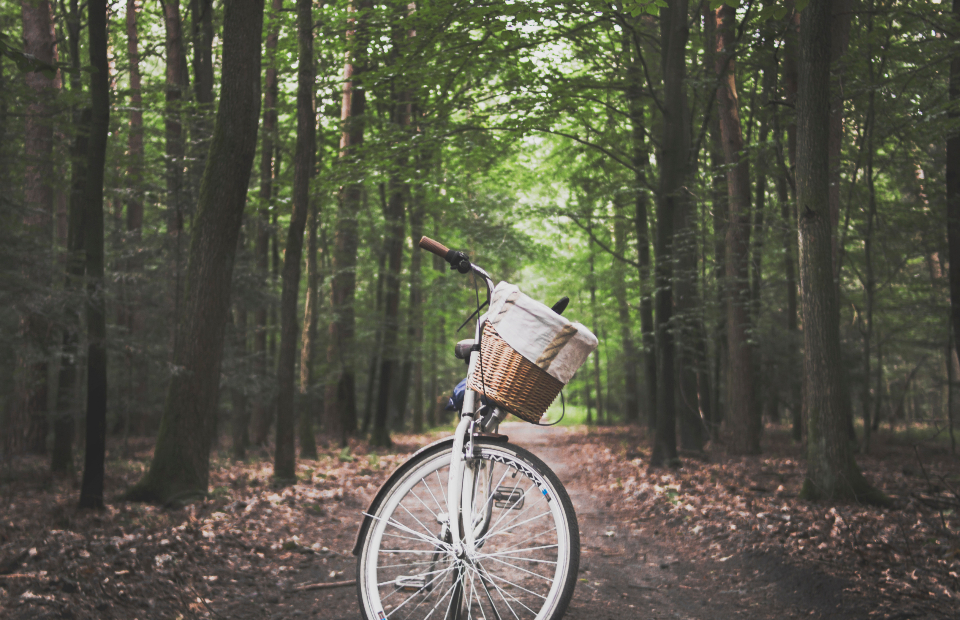

You already know how. Your body is just waiting to be reminded.
Somewhere in a garage, behind the lawn mower and a stack of paint cans, there is a bicycle with flat tires and a rusted chain. It belonged to a version of you who rode every day without thinking about it, and then one summer it went into the garage and stayed there. That was fifteen years ago, or thirty. The saying about never forgetting how to ride a bike is true, mostly. What people forget is not balance. It is confidence, traffic sense, and the small mechanical knowledge that keeps a ride from ending in frustration.
This is a guide for the returning rider — the person who is not training for anything, does not own matching gear, and would simply like to get on a bike again without feeling foolish or unsafe. It turns out to be one of the easiest re-entries into an active life there is, because a bicycle covers ground with a fraction of the joint impact of running, and because the distances feel generous. A twenty-minute walk gets you a mile. A twenty-minute ride gets you three or four, which is enough to reach the good coffee, the far side of the park, or the library on the other side of town.
The first honest conversation: what actually stops people
It is rarely fitness. When adults describe why the bike stayed in the garage, the reasons cluster into a short and very fixable list.
- Fear of cars. Overwhelmingly the biggest one, and entirely reasonable. The answer is not courage; it is route selection, which is a skill you can learn in an afternoon.
- Not knowing how to fix anything. A flat tire two miles from home feels like a catastrophe if you have never changed one. It takes about ten minutes once you have done it twice.
- The bike is uncomfortable. Almost always a fit problem, and almost always solvable with a wrench and fifteen minutes rather than a new bicycle.
- Feeling watched. The sense that everyone else on the path is faster, better equipped, and quietly judging. They are not. Most of them are also just out for a ride.
- No obvious reason to go. Riding in circles gets old. Riding somewhere does not.
Notice that none of those require getting fitter first. They require an hour of setup and a few deliberate early rides.
Getting a bike that works, without spending much
You do not need a new bicycle. You need a working one that fits. If the garage bike has a solid frame and no rust through the tubing, a local shop tune-up — typically the cost of a nice dinner out — will replace the cables, tires, and chain and hand you back something that rides better than it did when it was new.
What kind of bike suits a returning rider
Forget categories for a moment and think about posture. A road bike puts you low and stretched out, which is fast and efficient and also puts weight on your hands and wrists. A comfort or hybrid bike sits you more upright, which is easier on the back, gives you a better view of traffic, and makes it far simpler to look over your shoulder. For most people coming back after years off, upright wins.
Fit details that matter more than the brand
- Saddle height first. With your heel on the pedal at the bottom of the stroke, your leg should be nearly straight. Then, riding with the ball of your foot on the pedal, you will have the slight knee bend that prevents most knee pain. Nearly every returning rider has the saddle far too low.
- You should not sit flat-footed at a stop. Tiptoes or one foot down is correct. If both feet plant comfortably while you are seated, your saddle is too low and you are robbing yourself of power and comfort.
- Handlebars level with the saddle or higher. Most hybrid stems can be raised. This one change eliminates a lot of neck and wrist complaints.
- A wider saddle is not automatically a kinder saddle. Discomfort usually comes from sitting on soft tissue rather than the sit bones. Correct height and a slight tilt adjustment fix more than extra padding does.
- Tire pressure is the free upgrade. Underinflated tires feel sluggish and pinch-flat easily. Check the number printed on the sidewall and pump to it every few rides.
The first three rides, planned so they go well
The temptation is to go far immediately, because the bike makes distance feel cheap. Resist it. The goal of the first rides is not fitness, it is to build the reflexes back and to end each ride wanting another.
Ride one: an empty parking lot
This sounds patronizing and it is not. Find a school lot or an office park on a weekend. Spend twenty minutes practicing the things you will need on a road: starting from a stop with one pedal already raised toward two o’clock, braking hard enough to feel the front brake bite, riding a straight line while looking over your left shoulder, and signaling a turn with one hand off the bars. That last one is the skill people most often lack, and it is the one that keeps you predictable to drivers.
Ride two: a path with no cars
Rail trails, greenways, canal towpaths, park loops. Ride out for fifteen minutes and turn around. Thirty minutes total. You will want to go further and you should not, because the point is to finish fresh and to discover the next day whether anything hurts. Sore quads are fine. Sore wrists, neck, or knees mean go back and adjust the fit.
Ride three: somewhere useful
Pick a real destination within two or three miles — a coffee shop, a farmers market, a friend’s house. This is the ride that converts a bicycle from exercise equipment into transportation, and transportation is what sticks. Exercise is something you have to schedule. Errands happen anyway.
Traffic, without the fear
Riding near cars becomes far less frightening once you understand that most conflicts come from being invisible or unpredictable, and both are within your control.
- Ride further out than feels polite. Hugging the gutter puts you in debris, in the door zone of parked cars, and in a position where a driver can squeeze past without changing lanes. Riding about a meter from the curb makes you visible and forces a proper pass.
- The door zone is the real hazard. On streets with parallel parking, ride far enough out that a suddenly opened door cannot reach you. A car passing you is a known risk that drivers manage; a door is not.
- Make eye contact at intersections. Most collisions happen where paths cross, not on open road. If you cannot see the driver’s face at a side street, assume they have not seen you.
- Signal early and clearly. Arm out for several seconds before you move, not as you move. Predictability is the whole game.
- Use lights in daylight. A blinking front and rear light in the middle of the afternoon measurably increases how early drivers notice you. Rechargeable ones cost very little and clip on in seconds.
- Choose parallel streets. Almost every busy arterial has a quiet residential street one block over that goes to the same place. Spend one evening with a map finding your versions of these, and your city becomes a different place.
The five minutes of mechanics that prevent most bad days
You do not need to become a mechanic. You need one pre-ride check and one repair.
The check has three parts, and riders remember it as air, brakes, chain. Squeeze both tires — they should feel firm, not squishy. Pull both brake levers and roll the bike forward; the wheels should lock rather than creep. Glance at the chain; if it is dry and gray rather than dark and slightly oily, it needs lubricant. Thirty seconds, and it catches the great majority of problems before they strand you.
The repair is a flat tire. Buy a spare tube that matches your wheel size, two plastic tire levers, and a small pump or a set of carbon dioxide cartridges. Then, on a rainy Saturday, take a wheel off at your kitchen table and change the tube deliberately, with no time pressure. Do it twice. From that point on, a flat is a ten-minute inconvenience rather than a phone call for a ride home. That single afternoon removes more anxiety than any amount of encouragement.
Riding with other people when you are the slow one
Group rides have a reputation problem. The image is a tight line of very fit people in matching jerseys, and that image keeps a lot of would-be riders home. The reality in most towns is that the majority of organized rides are social, slow, and specifically designed for people exactly like you.
Look for the words no-drop, which means the group waits and nobody gets left behind. Look for rides described by pace rather than distance — a ten to twelve mile per hour ride is a conversational pace, not a workout. Community bike shops, libraries, parks departments, and local advocacy groups all run them, often on weekday evenings.
The first time, do two things. Tell someone at the start that you are returning to riding after a long break; the group will adjust, and you will usually find two other people who say the same. And ride near the front rather than the back, where the accordion effect of a group is gentler and you are less likely to be dropped on a hill.
What surprises returning riders most is the social texture. A ride is one of the few activities where you can talk with someone for an hour side by side, without eye contact, at a pace that keeps the conversation easy. Friendships form on bicycles at a rate that has very little to do with fitness.
Making it a habit instead of a phase
The riders who are still going next spring have almost always done the same few things. They store the bike somewhere reachable, because a bicycle behind three storage bins is a bicycle that never leaves. They keep a helmet, lights, and a small pump hanging by the door, so leaving takes ninety seconds rather than fifteen minutes. They replace one regular car trip a week with a ride, which gives the habit a reason that survives bad moods.
And they lower the bar on what counts. A fifteen-minute loop after dinner counts. Riding to the mailbox at the far end of the neighborhood counts. The thirty-mile Saturday will come on its own, months from now, and you will be surprised when it does — but it grows out of a hundred small ordinary rides, not out of a training plan.
Go pump up the tires this week. Not to start anything. Just to see how it feels.
