

The Kit in the Cupboard Has Never Helped Anyone
Most community groups own a first aid kit. It is usually a large red box, it usually lives in a cupboard at the hall, and it is usually not on the walk. That is the central problem of outdoor first aid for a volunteer leader: the gap between what you own and what is on your back when somebody goes down on a gravel path two kilometers from the parking lot.
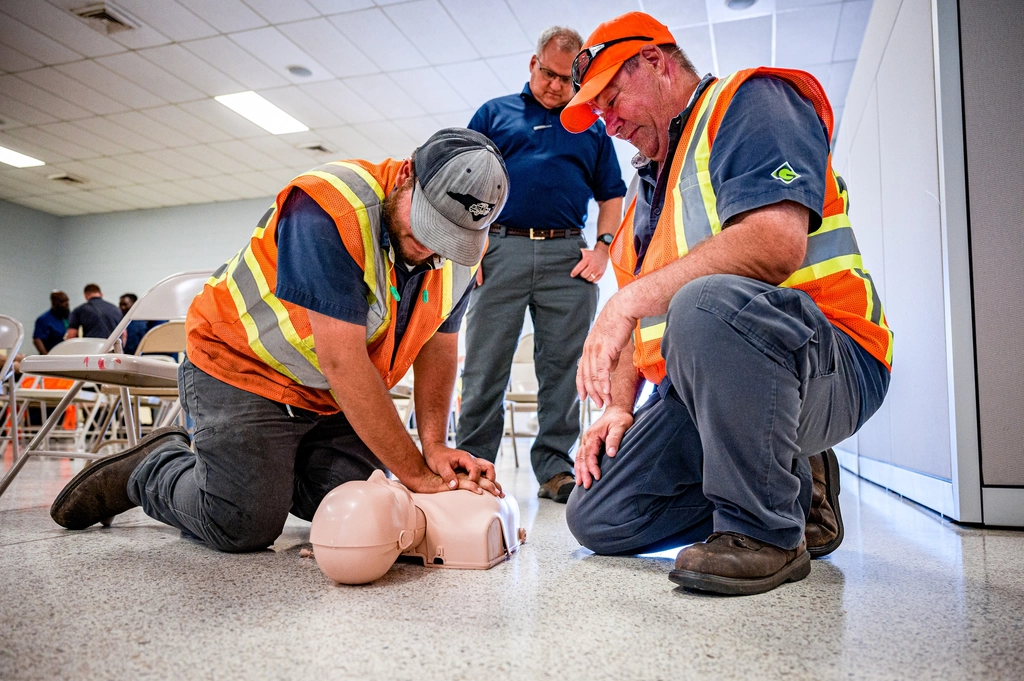
This is not a substitute for training. Nothing written down is. Every group leader should take a recognized first aid course, ideally one with a wilderness or remote component, and refresh it when it expires. What follows is about the decisions around the training — what to carry, what actually happens, and the unglamorous administrative side that protects both the group and you.
A Kit You Will Actually Carry
Weight decides everything. A kit that is too heavy stays behind, so build a small one you take every single time rather than a comprehensive one you take twice a year.
- Gloves, and more than one pair. The first thing you reach for and the thing most often missing. Carry several, because they tear, and because a second helper needs a pair too.
- Serious bleeding supplies. Several large absorbent dressings and a roller bandage. Small adhesive strips handle the everyday scrapes, but they are not what the kit exists for.
- A triangular bandage and tape. Between them they make a sling, secure a dressing, or splint a finger. High usefulness for almost no weight.
- An emergency blanket or bivvy bag. Someone who cannot walk gets cold fast, even in mild weather, because they have stopped generating heat. A bivvy bag is bulkier than a foil sheet and far more effective.
- Whatever the group’s own members need. If a participant carries an epinephrine auto-injector or a rescue inhaler, know that it exists and where it is. This is the single most valuable item on any outing and it is not in your kit.
- A charged phone, a whistle, and a headlamp. A whistle carries further than a voice and needs no battery, and a headlamp matters because incidents run long and daylight does not.
- A written list of participants and emergency contacts. Paper, in a bag, on your person. Phones break and die at exactly the wrong time.
The Handful of Situations That Actually Come Up
Bleeding
Direct pressure, hard, on the wound, with a dressing or with a gloved hand. Keep pressing rather than lifting to check, because lifting disrupts the clot that is forming. If blood soaks through, add another dressing on top of the first instead of removing it. Most bleeding that looks alarming stops with a few minutes of firm, uninterrupted pressure. Bleeding that is spurting, or that will not slow despite sustained pressure, is an emergency call.
Sprains, falls and suspected fractures
Ankles and wrists dominate the injury list on any walking group. The immediate steps are to stop, sit the person down, and look before deciding anything. Support the joint in the position that hurts least, and use cold if you have it. The real judgment is not diagnosis but transport: can this person walk out with support, or do you need help to reach them? People routinely try to walk on an injury and worsen it because they are embarrassed to hold the group up. Say plainly and early that stopping is the right call.
If someone has fallen from height, hit their head, or is confused or drowsy afterward, do not manage it as a sprain. Keep them still, keep them warm, and get professional help.
Allergic reaction
A severe allergic reaction can develop within minutes and is life-threatening. The signs that separate it from a mild reaction involve breathing and circulation: swelling of the lips, tongue or throat, difficulty breathing, a hoarse voice, sudden faintness or collapse, sometimes a widespread rash. If a person carries an epinephrine auto-injector, it is because a doctor decided they would need it in exactly that moment. Help them use it without delay, follow the device instructions, call emergency services immediately, and keep them lying down. Symptoms can return after apparent improvement, so anyone who has needed an injector goes to hospital regardless of how well they look afterward.
Heat and Cold Creep Up Rather Than Announcing Themselves
Both are far easier to prevent than to treat, and both are spotted by watching people rather than thermometers. Look for the person who has gone quiet, dropped to the back, or stopped drinking. Get them into shade or shelter, get fluids in if they are alert enough to drink, and stop the activity rather than pushing to a finish. Confusion, vomiting, or a person who stops sweating in the heat means calling for help rather than managing it yourself.
Call Early, and Call for Less Than You Think
Volunteers hesitate to call for help. They worry about wasting professional time, about overreacting, about the fuss. The reality is the opposite: the cost of calling early is a phone call, and the cost of calling late is that a walk-out becomes a carry-out in the dark.
Call without hesitating for chest pain, breathing difficulty, a suspected stroke, a seizure in someone with no history of them, a serious head injury, uncontrolled bleeding, or anyone who is not fully alert. Also call when the practical situation has failed even if the injury seems minor — a person who cannot walk, is a long way from a road, and is getting cold is an emergency of logistics rather than medicine, and it is exactly what rescue services exist for.
When you call, they will want a location above all. Learn to give a grid reference, a trail marker number, or a phone-derived coordinate, and know which parking lot the ambulance should use. Send someone to the road to meet them if you can spare a person.
When Someone Is Missing
Preventing it
Prevention is most of this. Head counts at every stop, an agreed rule that nobody walks ahead of the leader or behind the sweep, and a stated meeting point for anyone who gets separated. Tell everyone at the start: if you find yourself alone, stop moving and stay put.
If it happens anyway
If someone does go missing, note the time and where they were last seen, then check the obvious immediately — the last stop, the restrooms, the car. Do not scatter the group to search, which turns one missing person into several. Keep everyone together, send two people at most to check a defined stretch, and set a firm time by which you will call for professional help. For a child, someone with a medical condition, or bad weather closing in, call much sooner than feels polite.
The Paperwork Nobody Wants to Do
- Collect medical information and consent in advance. A short form covering relevant conditions, allergies, medication, and an emergency contact, filled in once a season. Knowing that someone is diabetic before they go pale is worth more than any item in your kit.
- Get proper consent for minors. A child on an outing needs a parent or guardian’s written permission, including agreement to emergency treatment, plus a contact who will actually answer the phone that day.
- Write down what happened, on the day. Time, what you saw, what you did, who else was there. Memory degrades fast and an honest contemporaneous note protects everyone, including the injured person.
- Check what your organization’s insurance covers. Volunteer leaders are often covered by the group’s policy, but only for stated activities. Find out before you add paddling or a night hike to the program, not after.
- Store the forms lawfully and narrowly. Health information is sensitive. Keep it where only leaders can see it, take only what you need, and delete it when the season ends.
None of this is legal or medical advice, and the specifics of consent, record-keeping and liability vary considerably by jurisdiction. Ask your local governing body or a lawyer if the group runs anything ambitious. But the general principle holds: a leader who has a form, a phone, a small kit on their back and a course under their belt handles almost anything a community walk produces, and does it calmly enough that everyone else stays calm too.
