
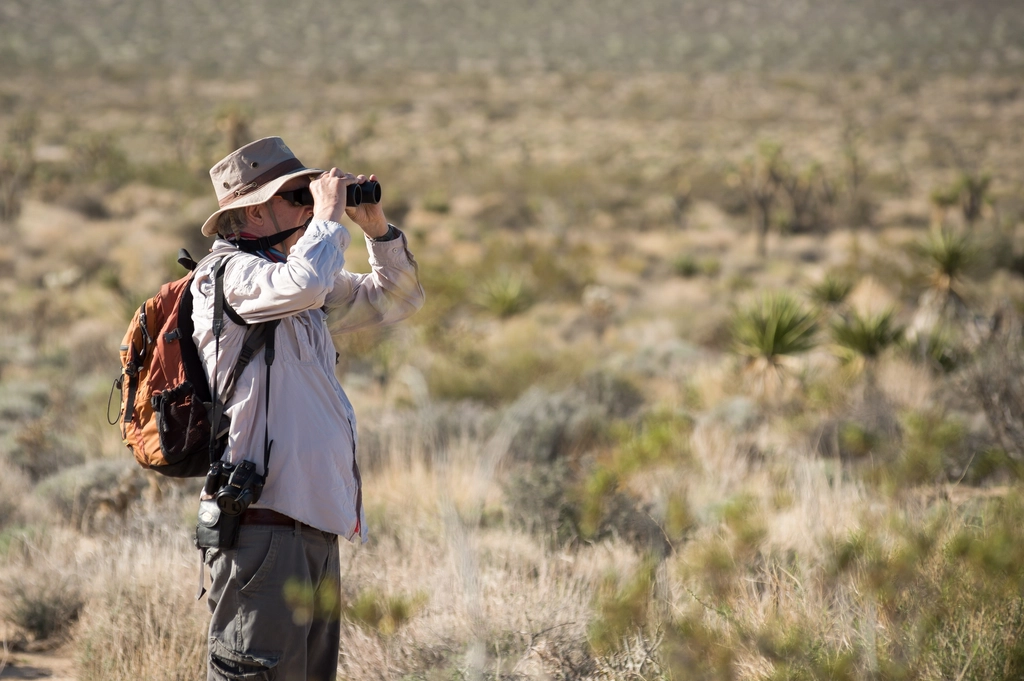

Why Anyone Would Stand Still in a Field Looking at Sparrows
Birdwatching has an image problem. It sounds like a hobby for people with expensive optics and a life list, which puts off exactly the people it would suit best. In practice it is the cheapest outdoor activity there is, it works at any speed including standing completely still, and it gives a walk a point without turning it into exercise. Most of all, it slows you down. You cannot rush birds. Ten minutes of not moving is the whole technique, and for a lot of people that ten minutes turns out to be the part they came back for.
Start With the Ten Birds Outside Your Own Door
The mistake beginners make is buying a field guide with six hundred species in it and trying to learn from the front. Nobody learns that way. Learn the birds that are already in your yard, your street, and the park you walk through — there will be roughly ten of them that you see nearly every day. Once those ten are automatic, the eleventh bird announces itself, because it looks wrong. That is how experienced birders actually work: they know the common ones so well that anything unusual jumps out.
- Pick a patch and repeat it. One park, one loop, one bench. Repetition beats novelty by a mile, because you start noticing which bird is always in the same tree and which one only turns up in the morning.
- Learn shape and behavior before color. Color is unreliable in poor light, and many birds look brown. Whether it hops or walks, whether it clings to a trunk, whether it flicks its tail, whether it flies in a straight line or in dips — those hold up at a distance.
- Write down what you saw before you look it up. Size compared to a bird you know, beak shape, what it was doing. This forces you to observe rather than to match pictures, and it is the single fastest way to improve.
- Use one small local guide, not a continental one. A regional booklet or a checklist from a local nature group cuts the field down to what you can actually meet, which makes identification possible instead of overwhelming.
Binoculars That Are Good Enough
The numbers on the box
You do not need good binoculars. You need adequate binoculars that you will actually carry, and there is a real gap between those two ideas. The specification worth knowing is a pair of numbers such as 8×42: the first is magnification, the second is the width of the front lens in millimeters. Eight times is right for most people. Ten times magnifies your own hand tremor along with the bird and is genuinely harder to hold steady, especially for older hands.
A 42-millimeter front lens gathers plenty of light for dawn and dusk but makes a heavier instrument. A 32 is lighter and fine in daylight. If a pair feels heavy in the shop, it will feel unbearable around your neck after two hours, and the pair you leave at home has no magnification at all.
Two adjustments nobody makes
Both take seconds and both are skipped. First, set the width so the two circles merge into one round image, not a figure eight. Second, use the diopter ring on the right eyepiece to correct for the difference between your eyes: cover the right lens, focus on something with the left, then cover the left and turn only the diopter until it is sharp. Do it once, remember the setting, and everything afterward is sharper.
Listening Is Better Than Looking
Experienced birders find most birds by ear and only then raise the binoculars. In leafy woodland in summer you may hear twenty birds for every one you see, so sight alone puts you at a permanent disadvantage. This sounds like an advanced skill and it is not. It is the same skill as recognizing a friend’s voice on the phone, and it comes from repetition rather than talent.
The practical starting point is to learn three or four common songs properly rather than dabbling in thirty. Stand still, close your eyes for a minute, and simply count how many different sounds you can separate. Most people are astonished at the number. Then attach a name to one of them and let the rest wait until next week. Phone apps that identify song from a recording are a genuinely useful learning tool, though they make confident mistakes in wind and traffic, so treat a suggestion as a hint to check rather than an answer.
Closing your eyes for sixty seconds is also, not coincidentally, the part of this that people describe as restful. Nothing is being achieved. That appears to be the point.
The Same Place Is a Different Place Every Month
Spring and summer
Spring is loud because song is territorial and breeding activity peaks. Dawn is the best hour of the year to be outside, and birds that were skulking in winter are suddenly conspicuous and singing from exposed perches. Summer goes quieter after the young fledge; adults molt, stop singing, and become harder to find, which surprises beginners who assume the hobby has stopped working.
Fall and winter
Fall brings movement. Species pass through that do not live near you at all, so a familiar patch collects surprises. Winter is the underrated season: leaves are down, sightlines are open, and birds concentrate around reliable food and water. A feeder in winter is the best beginner classroom there is, because the same species turn up repeatedly at a fixed distance in good light.
Why It Works Across Ages
Very few activities genuinely accommodate a seven-year-old and an eighty-five-year-old in the same hour. Birdwatching does, because it has no pace requirement and no minimum distance.
- Nobody has to keep up. A group that stops every few minutes anyway is a group in which slower walkers are not holding anyone back. Someone using a wheelchair or a walker can join a paved lakeside route and see as much as anyone.
- Children are better at it than adults. Their eyes are sharper, they are lower down, and they notice movement first. Giving a child the job of official spotter rather than making them a passenger changes an outing completely.
- Knowledge flows both ways. An older member who has watched the same marsh for forty years knows things no app does, and a teenager can work the recording app and the map. Both feel useful, which is most of what makes a group stick together.
- Share binoculars deliberately. One pair between two people, with the sighted person describing where to look using the clock face or a landmark, is more sociable than everyone staring silently through their own.
- Keep the outing short and have a destination. Ninety minutes with a bench and a thermos at the halfway point suits nearly everybody. Long marches suit almost nobody.
A Few Habits Worth Adopting Early
Keep your distance and read the bird’s behavior; if it stops what it was doing and watches you, you are too close and should back off. Give nests a wide berth entirely during breeding season, and never play recorded song to draw a bird out, which wastes the energy of a bird defending a territory against a rival that does not exist. Stay on paths, because trampled ground margins take a long time to recover.
Wear dull colors, move slowly, and stop talking when you stop walking. And keep a simple list — date, place, what you saw. Not for anyone else. After a couple of years the list becomes a record of where you were and who you were with, which is a strange and quietly good thing to own.
That is the whole of it. Ten birds, one park, a pair of binoculars you can carry, and the willingness to stand still for a minute longer than feels natural.
