
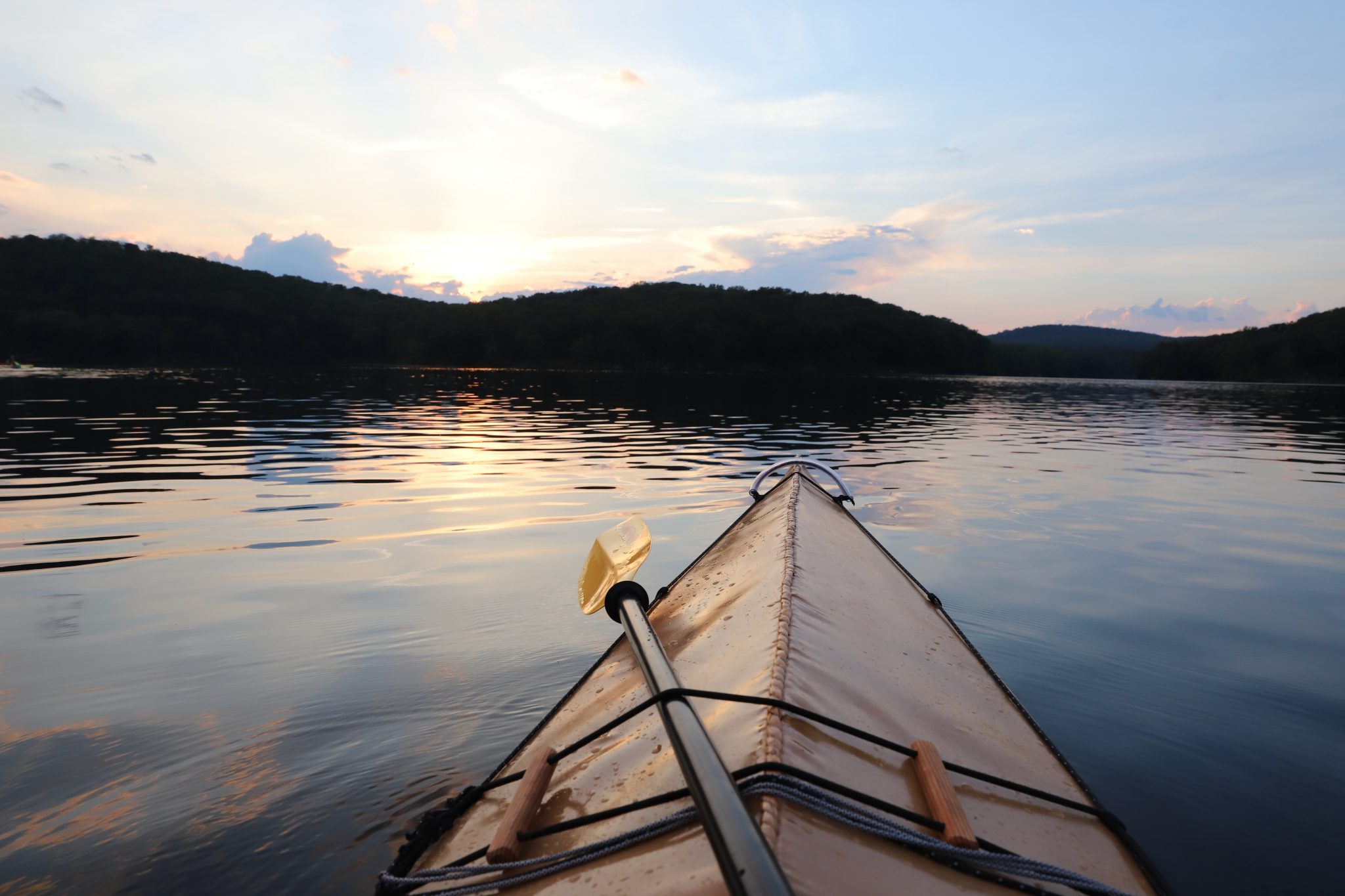

The First Time in a Boat Is Mostly About Choosing the Right One
Most people who say they don’t like being on the water have tried it once, in whatever craft happened to be free, on a day when the wind was up. That is not a fair test. A calm morning in a stable boat that suits your body is a completely different experience — slow, quiet, and surprisingly easy on the joints. The trick is getting that first outing right, and most of that is decided before anyone touches the water. What follows assumes nothing: not that you swim well, not that you are strong, not that you have ever held a paddle.
Kayak, Canoe or Paddleboard: What Actually Differs
All three are good; they suit different bodies and different days. What matters for a first-timer is how easy the craft is to get into, how stable it feels, and how forgiving it is when you stop paying attention.
Sit-on-top kayaks
For a first outing, this is the one to beat. You sit on the deck rather than inside a cockpit, so there is no feeling of being trapped, and if you go over you float clear and climb back on. They are wide, slow, and very hard to tip. The double-bladed paddle is intuitive: dip one side, then the other. Most people are moving in a straight line within ten minutes.
Sit-inside kayaks
Faster, drier in cool weather, better in wind because you sit lower. The tradeoff is that getting out in a hurry takes practice. Graduate to these; don’t start with them, unless someone experienced is running a session on wet exits.
Canoes
The most sociable craft on the water: two or three people plus gear, and you can talk without shouting over your shoulder. The single-bladed stroke is gentler on the shoulders too. The catch is that canoes catch more wind, and steering one with two beginners aboard is genuinely a skill. Put an experienced paddler in the stern and a beginner in the bow and everyone has a lovely time.
Paddleboards
The most fun and the most likely to dunk you, which for many people is the point. Two things beginners should know: you can kneel the whole time and it still counts, and a board is only easy in calm conditions. A breeze a kayak shrugs off will push a standing paddler around like a sail.
Life Jackets Are Worn, Not Carried
A life jacket in the bottom of the boat has never saved anybody. Capsizes are sudden: you are in the water before you have decided anything, and in cold water your hands stop working within a couple of minutes. Nobody threads their arms into a jacket then. So the group rule is simple — everyone wears one from the moment a boat leaves shore until it is back on land, no exceptions for strong swimmers or short crossings. Legal requirements also vary by place and by craft, so check what applies where you paddle.
- Fit matters more than the label. A jacket that is too big rides up over your ears in the water and won’t hold your chin clear. Tighten every strap, then have someone pull firmly up on the shoulders. If it slides past your chin, it is too loose or too large.
- Size children by weight, not age. Youth and infant jackets are labeled by weight range for a reason. A child in an adult jacket can be worse off than one in nothing, because it can float off over the head.
- Inflatable belt packs are not beginner gear. They need a handle pulled and often a collar put over the head after inflation — conscious tasks at a moment when beginners are not doing conscious tasks. Use foam.
- Check foam and buckles each season. Foam degrades with sunlight and compression, and webbing goes brittle. A jacket stored damp for three years is decoration, not equipment.
Cold Water Is the Real Hazard, Not Depth
Water does not have to be near freezing to be dangerous. Sudden immersion in water meaningfully colder than the body triggers an involuntary gasp followed by rapid, uncontrollable breathing. If your face is under when that gasp comes, you inhale water. It is strongest in the first minute or so, and it happens to fit, experienced people as readily as anyone else.
After that the problem shifts. Within roughly ten minutes, hands and forearms lose strength and fine control, so gripping a boat or hauling yourself onto a board becomes hard and then impossible. Genuine hypothermia takes far longer, which is why the early stages catch people out. Spring and fall therefore deserve more caution than midsummer even on warm sunny days, because air temperature tells you nothing about the water.
If someone comes out shivering hard, get them out of the wind, into dry layers, and gently moving. Shivering that stops without the person warming up, confusion, or slurred speech are reasons to seek help rather than carry on. None of this is medical advice — if you are unsure about someone’s condition, treat it as urgent and call a professional.
Reading a Small Lake or a Slow River
On a lake
Wind is the whole story. A lake is calm along an upwind shore and choppy at the far end, where the wind has had distance to build waves. Beginners paddle out with the wind behind them, feel strong, then find the return leg twice as hard. Go out into the wind while you are fresh and come home with it, and hug the shoreline rather than crossing open middles.
On a slow river
Current does most of the work and most of the mischief. Water moves fastest on the outside of a bend, exactly where you get pushed into overhanging branches. The serious hazard is a strainer — a fallen tree or brush pile that water flows through but a body does not; the current pins you against it. Stay to the inside of bends and never grab at a downed tree. Plan the exit before the entry, too: downstream trips are easy going out and miserable coming back.
How a Group Trip Should Actually Be Run
- Two experienced paddlers, front and back. One sets a deliberately slow pace, one sweeps at the rear so nobody is ever the last person alone. Say out loud at the start that the group moves at the speed of its slowest boat, so that person never has to feel apologetic.
- A shore briefing before anybody floats. Ten minutes on holding the paddle, getting in and out, what to do if you tip, and where you will stop. People retain almost nothing shouted across open water.
- A deliberate practice tip, conditions allowing. In warm shallow water near shore, let anyone willing capsize on purpose and climb back on. It turns the worst case into something they have already survived once, on their own terms.
- Keep the first trip short. An hour is plenty. Beginners use muscles they didn’t know they had, and shoulder fatigue arrives all at once. Ending while everyone still feels good is what makes them come back.
- Leave a plan on land. A written route and return time with someone ashore, and a charged phone in a dry bag on a body — not clipped to a boat, which may end up elsewhere. Then count the boats out loud at every stop.
What to Bring, and What to Skip
New paddlers overpack and still forget the four things that matter: water, because sun off the surface makes paddling deceptively dehydrating; sun protection including a hat with a strap; a full change of clothes left in the car, which turns a soaking from a trip-ender into a funny story; and footwear that stays on in mud, meaning old sneakers or water shoes, never flip-flops.
Leave cotton at home in cool weather, and buy nothing until you have borrowed or rented three or four times. Most community groups have a shed full of gear somebody bought in a fit of enthusiasm and used twice. Paddling rewards patience more than fitness anyway. The people who end up loving it are rarely the strongest — they are the ones who worked out that a boat moves fine at a conversational pace, and that the herons reappear once you stop thrashing.
