
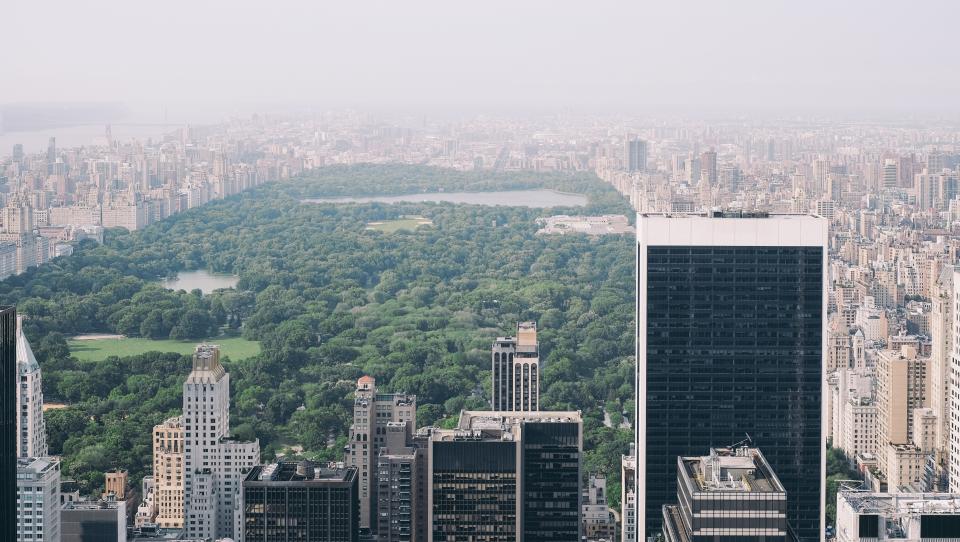

The outdoors is not somewhere you drive to
Ask most people where they go to be outside and they will name a place ninety minutes away. A state park, a lake, a stretch of mountains they visit twice a year and think about far more often than that. Meanwhile they walk past a creek corridor every morning on the way to work and have never once followed it.
This is the central problem of urban outdoor life. We hold an image of nature that requires a car, a weekend, and a plan, and because that image is expensive, we mostly do not act on it. The alternative is not settling for less. It is noticing that a city is full of green that is genuinely worth your time — a river path, a cemetery with two-hundred-year-old oaks, a triangle of grass where three streets meet, a rail line that became a trail. These places are not a consolation prize for people who cannot get to the mountains. They are the reason it is possible to be outside four times a week instead of four times a year.
What counts as green, once you lower the bar
The mental category most of us carry is too narrow. Widen it, and a typical city goes from having three outdoor destinations to having forty.
- Greenways and rail trails. Former rail corridors and utility easements turned into paved or gravel paths. They are flat, continuous, often shaded, and they connect neighborhoods that roads separate. They are the single most underused outdoor asset in most American cities.
- River and creek corridors. Water carves the one kind of land developers usually cannot build on, which is why a surprising ribbon of trees often follows a stream straight through a dense area.
- Cemeteries and arboretums. Quiet, mature canopy, paved loops, and almost never crowded. Many older cemeteries were explicitly designed as public walking grounds before public parks existed.
- College and hospital campuses. Large landscaped grounds that are generally open to the public, with lighting, restrooms, and paths that are maintained year round.
- Pocket parks and plazas. A quarter acre with four benches and a tree. Too small for a hike, exactly right for a lunch break outdoors, which is the point.
- Reservoir and utility land. Watershed property, levee tops, and drainage basins are frequently open for walking and almost always empty.
- School grounds after hours. Tracks and fields that sit unused every evening and weekend, with a soft surface that is kind to knees.
Building your own map of the city
Nobody hands you this. Finding the green in a city is a small research project, and doing it once pays out for years.
Start from the satellite view
Open a satellite map of your area and zoom to about a two-mile radius around home. Ignore labels entirely and just look for green. You will find shapes you did not know existed — a wooded strip behind a shopping center, a linear park following a power line, a wide grassy easement along a highway. Mark five of them. Some will be inaccessible or unpleasant. Two or three will become regular destinations.
Check the parks department, then check the county
City parks departments publish maps, but they only show city land. County parks, regional trail authorities, water districts, and land conservancies each hold separate parcels with separate maps, and none of them appear in the same place. Twenty minutes of searching typically doubles the list.
Walk the connections, not just the destinations
The real unlock in a city is discovering that two parks you know are joined by a path you did not. A greenway that seems to end at a road often resumes on the far side, sometimes a block down. Following those seams is how a set of isolated squares becomes a network you can move through for an hour without repeating yourself.
What the research keeps finding about urban green
The case for city nature is not sentimental. It has become one of the better-supported findings in public health, and the details are more interesting than the headline.
Repeated studies have found that people living near green space report lower stress, and that the effect appears even when the green space is modest — street trees, a small park, a view of vegetation from a window. Frequency appears to matter more than grandeur. Regular short exposures do more measurable good than an occasional spectacular one, which is precisely the opposite of how most people organize their outdoor lives.
There are physical effects too. Tree canopy lowers surface temperatures substantially on hot days, which turns a shaded street into a place you can actually walk in August. Vegetated corridors buffer traffic noise. And the simple availability of a pleasant walking route increases how much people walk, which is the whole ballgame for long-term health.
None of that requires wilderness. It requires proximity, and proximity is the one thing a city is good at.
Fitting it into a real day
The obstacle in a city is almost never distance. It is that the day is already full. The people who manage consistent outdoor time have generally attached it to something they were doing anyway.
- Take the meeting outside. A one-on-one conversation works better walking than sitting, and it costs no extra time at all. Phone calls in particular are perfectly suited to a loop around the block.
- Move lunch. Twenty minutes on a bench with actual daylight resets an afternoon more effectively than the same twenty minutes at a desk. The nearest pocket park is usually closer than the sandwich place.
- Get off one stop early. If you take transit, ending your ride ten minutes from home turns a commute into a walk without adding a single item to the schedule.
- Park at the far end. A trivial habit that quietly adds up to a couple of miles a week and costs nothing but the willingness to look slightly odd.
- Anchor to an errand. Walk to the pharmacy along the creek path instead of driving the direct route. The errand supplies the motivation on days when the walk alone would not.
- Use the shoulder hours. Before seven in the morning and after seven in the evening, city green space is nearly empty and the light is at its best. This is when urban parks feel most like the places people drive hours to reach.
Dealing honestly with the awkward parts
City outdoor space has real drawbacks and pretending otherwise helps nobody.
Some parks feel unsafe, particularly in low light or when empty. That is a legitimate constraint, not a failure of nerve. The practical responses are to go at busier hours, choose routes with sight lines and through-traffic, and go with someone. A walking partner solves the problem more completely than any other measure, and it doubles as the reason you actually go.
Noise and air quality are the other honest complaints. A path directly alongside a freeway is measurably worse air than one three blocks inland, and traffic noise blunts most of the restorative effect. When you have a choice, favor the route that puts a building line or a stand of trees between you and the arterial — the difference in how a walk feels is larger than you would expect from a change of one block.
Access is also unevenly distributed, and that is worth naming. Tree canopy and park acreage in most American cities correlate closely with income and with historical redlining, which means the neighborhoods that most need shade and green often have the least. If your neighborhood is on the short end of that, the individual response is to use what exists relentlessly, and the collective one is in the next section.
Turning solo walking into something shared
Urban outdoor time defaults to solitary, and that is a missed opportunity, because a city has more people per square mile than anywhere else on earth. The infrastructure for going together already exists in most places; it is just quiet about itself.
Park conservancies and friends-of groups run workdays — mulching, invasive plant removal, trail maintenance — that are essentially guided outdoor time with a purpose and a built-in social structure. Birding groups run free beginner walks that are far less intimidating than the hobby’s reputation suggests, and a city park during spring migration is one of the genuinely great wildlife experiences available anywhere. Local historical societies lead architecture and neighborhood walks that turn familiar streets into something you have never seen.
If none of that exists near you, the smallest possible version works: pick a fixed weekly time, tell four people, and show up at the same corner whether or not anyone else does. Consistency does most of the recruiting. Groups that meet at an unpredictable time die; groups that meet every Tuesday at six survive on almost no effort at all.
Advocating for the green you do not have yet
Everything above works with the city you already live in. It is also worth knowing that the map is not fixed, and that the people who change it are usually not experts.
Most trail extensions, crosswalk installations, and new pocket parks trace back to a handful of residents who kept showing up at planning meetings. Parks master plans get updated on public comment periods that almost nobody participates in, which means a dozen coordinated emails can genuinely shift a priority list. Requests for street trees are frequently free through a city forestry program and go unfilled simply because nobody asked.
Start by finding out which body controls the green space near you, and when it meets. Then say the specific thing: this path should connect to that one, this trailhead needs a light, this vacant lot could hold twelve trees. Vague support for parks changes nothing. A specific request from someone who clearly uses the place changes surprising amounts.
The mountains will still be there in the spring. In the meantime, there is a creek four blocks from your front door that you have never followed to see where it goes. Go find out this week.
