

An outdoor scavenger hunt works for mixed ages when you build one list with several ways to play it: simple look-and-tick for the youngest, photos or sensory tasks for older children, and mixed teams for adults. Choose a familiar park, keep the route short, and write clues around things people can reliably find. This guide walks you through the choices in the order you will face them.
What kind of outdoor scavenger hunt should you run?
Before you write a single clue, decide what the group will be doing. A scavenger hunt is a game in which organizers prepare a list of items to find, and participants work to gather or complete everything on it, usually without buying anything. Teams are the usual format, though individuals can play too. Variations include taking photographs of the listed items or completing tasks in the most creative way. The goal is either to finish the list first or to find the most items.
For a community outing, the most useful choice is how the group will prove a find. You have three practical options:
- Tick-off sheet: players check items on a printed list. This suits young children, who enjoy the thrill of finding something and marking it.
- Photo hunt: players take a picture of each item instead of collecting it. This suits older children and adults, and it leaves the park exactly as you found it.
- Sensory hunt: instead of only looking, players listen for a bird, feel something wet, smell something pleasant, or notice a texture. This slows the pace and works well for people who would rather observe than race.
Pick one as the main format and treat the others as upgrades for particular players. That keeps your instructions short and your group together.
How do you build a clue list around a local park?
Start by walking the space yourself, ideally a few days ahead and at the same time of day as the event. You are checking that every item on your list can actually be found, not hoping it can. A list built from memory is the most common reason a hunt falls flat.
Draw items from categories that appear almost anywhere outdoors:
- Colors: a color-based list is a good fit for younger children and often surprises adults with how many natural shades turn up.
- Textures: something soft, something rough, something smooth, something prickly. Bark, moss, stones and pinecones cover most of these.
- Living and non-living things: sorting what you find into those two groups gives older children something to think about.
- Signs of wildlife: feathers, nests, insects and animal tracks, where the season and location allow.
- Trees and plants: leaves of different shapes, flowers, mushrooms, pinecones.
Keep a few wildcard items that are nearly guaranteed, such as a stone or a leaf, so no team finishes with a blank sheet. Avoid anything that depends on luck, like seeing a specific animal.
If you want to follow a theme, season is an easy one. A holiday walk can send people through a neighborhood looking at decorations rather than collecting anything, which suits groups who would rather stay on the sidewalk.
How do you keep mixed ages and abilities playing together?
The hunt succeeds when nobody is left behind, and that is mostly a design question rather than a fitness one. A few choices make a large difference.
Layer the list
Write one list with a common core and then add a second tier for players who want more challenge. Younger children can work from the core items, while older children and adults take on the harder ones. An alphabet version, where players find something starting with each letter, scales naturally: a young reader matches letters, an older player looks for less obvious answers.
Pair people on purpose
Older children can help the little ones, which gives them a chance to use their reading skills and take on a leadership role. The same logic works across generations: put an older adult with a child and let each contribute what they know. Mixed teams also stop faster walkers from pulling away from the group.
Make the route work for every body
Choose paths that people with limited mobility, strollers or walking aids can use, and place the sensory and observation items along that route rather than off it. Offer a seated option, such as a bench where a team member can keep the sheet and listen for sounds. Moving at the speed of the slowest player is not a compromise; it is the plan.
Cut the competition if it causes trouble
A race can discourage the players you most want to keep. If it does, change the goal to completing the list together, or to finding the most creative answer rather than the fastest.
What tools do you need to make the clue sheets?
You can run a good hunt with almost nothing. Free printable bundles exist that cover themes such as park and playground, forest and hiking, neighborhood, creatures, and color, which can save you the writing. Use them as they are, or treat them as a starting point and adapt the items to your own site.
If you make your own, a few habits help:
- Use a word processor or a simple table and keep the font large enough to read outdoors.
- Put a box beside each item so players can tick it off.
- Use pictures next to the words for children who are not yet reading.
- Print a few spare copies, and bring pencils, since pens run out and phones run low.
- If you are doing a photo hunt, remind teams to bring at least one charged phone or camera.
If a printer is not available, writing the list by hand works just as well. A short list, clearly written, beats an elaborate one that nobody can read in the open air.
Bring a bag or bucket if collecting is allowed, and set one rule up front: take only what is already on the ground, and leave any living creature where it is.
How do you keep a group safe, and make the hunt a first step into regular outdoor activity?
Larger groups need a few simple systems. Brief everyone before you start and name a clear meeting point and finishing time. Divide people into teams with an adult or responsible older player in each, and make sure someone in every team knows how to reach you. Walk through your site in advance and note hazards such as water, steep ground, roads, uneven paths and plants you would rather people not touch. Tell the group which areas are out of bounds, and remind them not to taste or pick anything they cannot identify.
Bring basic first aid, and check the weather before you go. Having water available and a shaded place to stop matters more than most organizers expect, especially for older adults and young children. Count heads at the start, at any midpoint, and at the end. Having a second adult as a sweeper at the back of the group stops anyone drifting behind unnoticed.
The hunt also does something beyond the afternoon itself. It gives people a reason to be outside that has nothing to do with fitness, which makes it easy to say yes to. It also helps children feel comfortable in a new place, because they have a job to do while they are there.
To turn one event into a habit, finish by asking what people enjoyed and announce the next date before they leave. Repeat the format in a different park or a different season, so the list feels fresh and people have a reason to come back.
Frequently asked questions
Can an outdoor scavenger hunt work for adults as well as children?
Yes. Photo hunts, creative challenges and sensory tasks give adults something to do beyond ticking boxes. Mixing ages within teams also works well, since each person contributes something different.
Do players need to collect the items they find?
No. Photographing each item means nothing is taken from the park. If you do allow collecting, limit it to things already on the ground and leave any living creature where you found it.
What can you do for a hunt when you cannot get outside?
A neighborhood or street-based list still works, since players can look at things from the sidewalk. Free printable sets also include an indoor version for days when going out is not possible.
How do you stop a hunt from turning into a race?
Change the goal. Ask teams to complete the list together, or reward the most creative answer rather than the fastest finish. That keeps slower walkers and younger children involved.
Related reading
- Gear That Is Good Enough: What You Actually Need Outdoors
- Birdwatching: Learning the Ten Birds on Your Street
Sources
- Scavenger hunt — Wikipédia (en.wikipedia.org, accessed 2026-11-02)
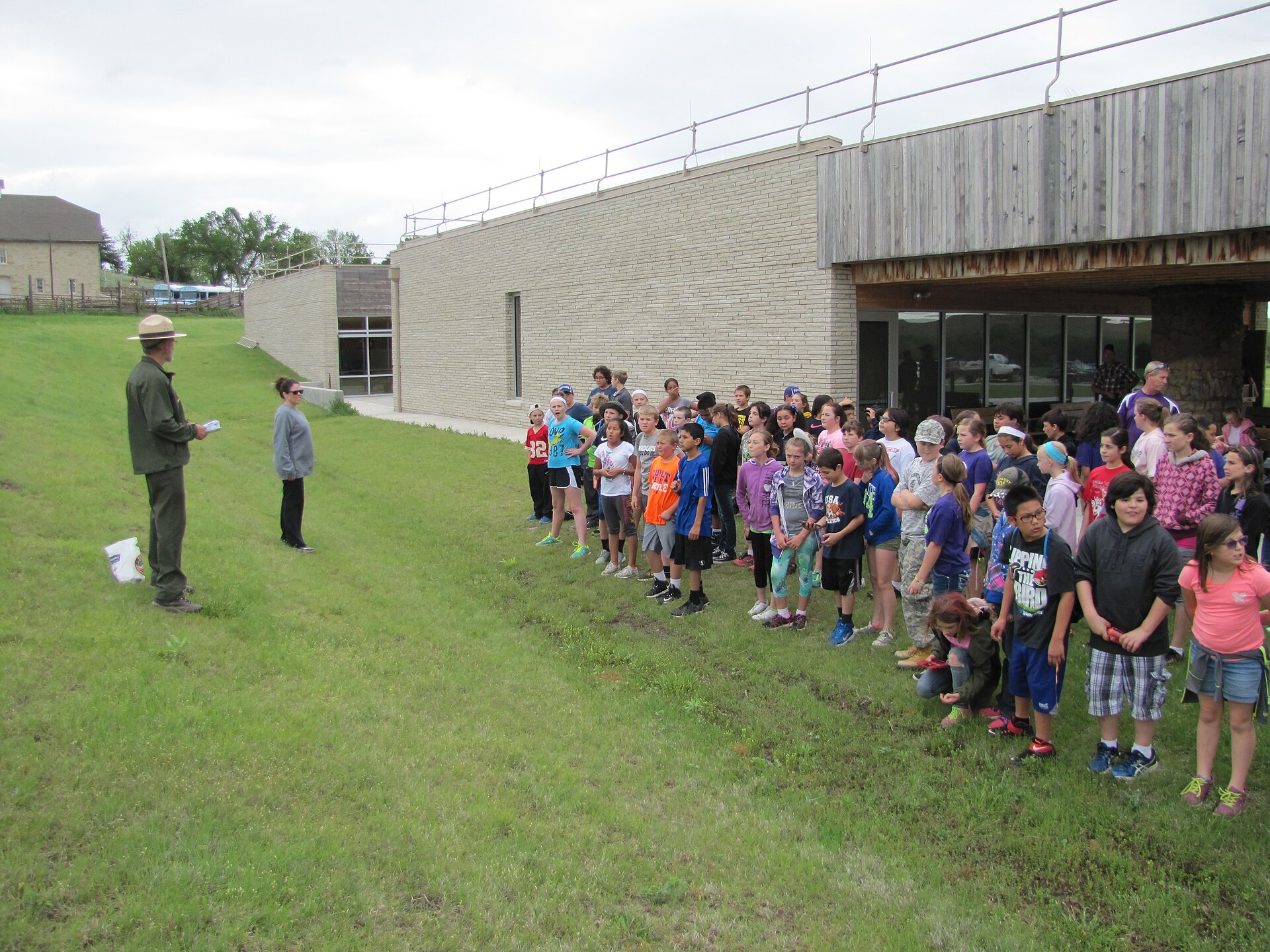
Photo: Kids becoming Jr. Rangers, by NPS, Public domain (Wikimedia Commons)
Read next: Game of Beach: Easy Group Games That Work on the Sand

